Thursday, August 25, 2011

Ecole de Voile

Sailing School
We'd been eyeing this sailing school in La Tour de Peilz since Michael was 3, admiring family friend Isaac's Wed afterschool lessons (Wed: 1/2 day school - mountain kids go skiing in winter!).
Sailing's been on our minds, since being with the Bonds on Whidbey Island, raising all things nautical, like kayaking, up a notch. (Jack on the left in the last boat).

The La Tour school differs from most in teaching the work of sailing: pulling out the boat, assembling the sail, docking.
They learned to right a capsized boat, perform rescues.Even Jack joined the 5-7 yr old course.
Sailing &, especially skiing - given the natural resources - are generally "normal" here, not falling into the haves vs have nots camps. Families also budget more for vacations - a frequent criticism of our, perhaps, more European-style president - taking advantage of their mandatory holiday time; by contrast, American work conditions seen as generally harsh. We'll never be Europe, but I'm keenly aware of the diminishing standard of living for the American middle class, real wages having stagnated since the 1970s.

My diatribe (after 2 years of reading): part of the credit crisis owes to Americans trying to recoup via credit and sending out an additional wage-earner what their parents had outright; mistakenly thinking owning more and better quality goods compensated for lack of time to even enjoy them; see Juliet Schor's The Overworked American: The Unexpected Decline of Leisure.

My own family's working roots have spoiled me against golf & tennis, ie leisure sports, even though I'd probably enjoy the former; it always seemed to be about real estate.

Anyway, I'm a tenured academic with the last company job in the country whose unemployed summer status is coming to an end. Everyone appears to be thriving, Carolyn using her French in town, kids in school next week, & Wed afternoon sailing lessons running through fall. We have a schedule.

Monday, August 22, 2011

Update

We're in school limbo in the canton (state) of Vaud; term begins today, but we meet with more Swiss school officials Tuesday to assess Michael & Jack; placement thereafter. Not worried about the French, the officials want to see how the boys function in their native language, so we're playing hookie from the start.

The Swiss system, like the US, is fiercely governed locally; not one national model - an oddity separating both nations from other nation-states. Indeed, the US was an early inspiration for CH's regional, autonomous approach, thus explaining its anomaly status within Europe - non-EU, non-Euro. Health insurance required, not nationalized.

***
Money is, of course, a topic of major concern
The 1000 CHF note is a pretty purple and BIG; the denominations increase in size and value, as do their coins, with the exception of the .5o centime piece: small but mighty. The notes sport key literary, historical figures and now have fancy electronic imaging to prevent counterfeiting. In contrast to Euro notes:
which have generic images - types - of European architectural styles, since individual nations couldn't agree on whose national icons should emblaze which bill.

This trip suffers from a currency war in which the US is a key player; heavily indebted, having borrowed billions abroad (and domestically), to underwrite spending, we are paying back $s by lowering their value. If I owe you $1,000, I can pay back less by making it worth $800; something domestic vendors from Breyer's to Biolage have engaged in, shrinking containers, portions, and quality to offset costs. The last time we were faced with this, birthed the "fun-size" candy bar back in the 1970s.

Many nations made money off the USA's arrangement - we buy, they build - so guilt is everywhere. High CHF or Yen doesn't help the Swiss or Japanese export or tourism industry either, although it empowers them to travel, spend abroad. Older German investors, facing demographic demise, chose to invest in American subprime real estate, as well, for retirement income - no kids to support them - but lets just say that Americans abroad are caught in-between:

4 years ago, for $1, you got CHF (SwissFranc):


Today:


It's a sobering reality hard to accept, I think, to consider the decline of your own country. Christians have understood downward trends as cultural decadence for awhile, but usually not economic demise. Our own myths of inventiveness, drive, untapped creative energy, etc. keep the national ego strong - can't happen here - especially with elections looming.

Given that Christian theology is so rich in articulating debt, slavery, payment, etc, you'd think the Church would have more of a voice in these times. I am amazed that the first performance of Handel's Messiah was a fundraiser to liberate debtors.

I also wonder about the utopic promise of technology, geared more for personal distraction, turning to Charles Hugh Smith:

"'Innovation' stays safely corralled in the realm of toys, gadgets and social media. Real innovations in education, governance, the legal system, etc. that threaten the status quo fiefdoms and Power Elites are smothered at birth."


Serious thoughts for serious times.

***
I leave you with some Swiss pics:

The Swiss version of water cooler can be hyper-elegant; choice of mineral, sparkling, non-sparkling, etc.

Swiss are the world's biggest per capita consumer of chocolate, so are always innovating their taste:
How about a chocolate chip chip?

Back to Migros, the main supermarket chain
Need to keep a 2 CHF piece handy for those carts - the coin releases the cart, and is refunded upon return.Jack heads straight for the bread!
I the mushrooms - these chantrelles were boxed in lovely wooden crates.
Stop for coffee break. Pain au chocolat for Jack,who runs to the window each time a train passes, counting each car; joyfully exclaiming when a double-decker pulls in.
Spectacular sunsets off our living room.

Saturday, August 13, 2011

The Move

Next time: 24 footer needed.
This move was surprisingly hard; then I realized: we're out of practice! We had lived in one place not for one, but over 3 years! Our neighbors threw us a party the day before leaving, echoing gatherings of our "new" and old church groups. With Beacon Hill & GRC, we felt more attached than ever; resettling in CH* - at least for me - feels different this time. Not singing "I Left My Heart in Camarillo" yet though.
The two out-of-country spots we know best - Japan & CH - resemble each other in striking ways, most painfully now in terms of currency exchange, as the world's investors look to the Swiss Franc and Yen for safety, given the dollar collapse.
Really pricey now: $1 = .75 centimes. OUCH! CH is 20% higher living costs than Europe anyway, and a Big Mac in Zurich priced in at over $17.00 last week.

We are under the Pepperdine safety net for half of the main meals - huddling close like US soldiers in Japan, staying on base where their dollars hold sway - but make our way out to explore.
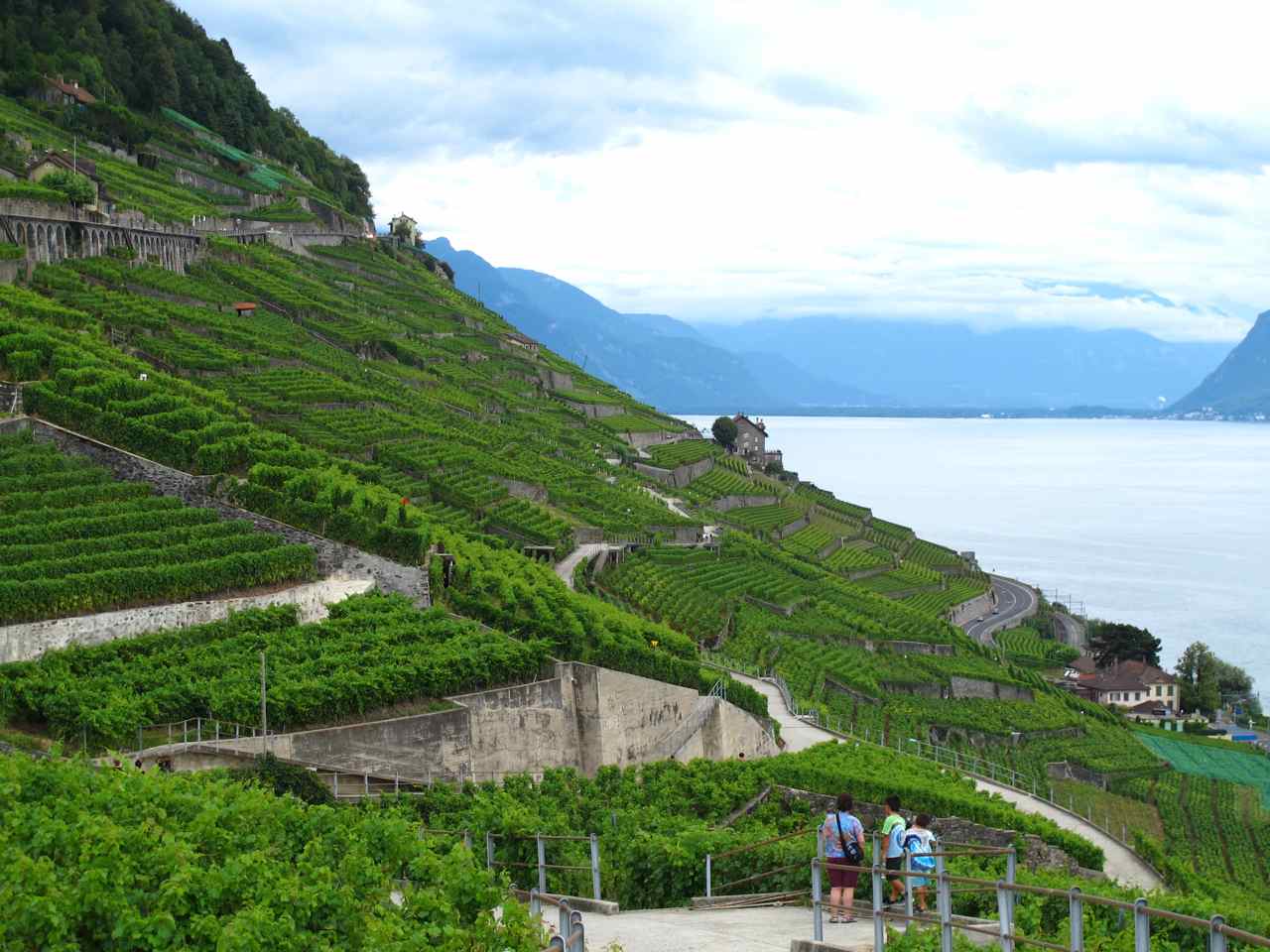
These terraced vineyards along the lake take my breathe away every time; deemd a UNESCO World Heritage Site 4 years ago. Hiking trails run parallel and shortcut paths cut across to other levels.
Refilling water bottles is a fun sport; village fountains supplied by tasty mountain run-off.

Michael & Jack experience much nostalgia as they reacquaint with familiar see-saws, climbing trees, All Saints Church. Since we moved often and travel besides, they probably make mental adjustments more than most: ie this slide looks smaller, this railing shorter. At some point last year to his and my sadness, Michael became too heavy to ride on my shoulders. The boys have their lives ahead of them, but even at 8 & 6, sense time passing. Nothing registers life's melancholy quite like the steady aging of children.

***
New things. We visited the wonderful Food Museum (Alimentarium) in Vevey, sponsored by Nestles, the world's largest food company. History and geography of cuisine and a killer kitchen of a carefully prepared, set menu (4 course meal), this place was fascinating.
Nutrition research, 200 year old dissertations. The museum is in the old Nestle mansion (the company owns Vevey) on the lake front.
A fitness/calorie burning center complete with a somewhat more complex nutrition pyramid; Jack mostly favoring the middle carb/fat levels! Swiss are really health conscious now - nutrition labels, city initiatives to walk more, health clubs - though a far cry from USA's multi-billion dollar diet & obesity business.
Outdoor gardens supply the museum restaurant and Michael found his favorite - pumpkins - hanging on an arbor!

Although the quality of restaurant meals is uniformly good, the exchange rate, twenty years of the USA's food revolution, and our credit-based, eat-out-all-the-time lifestyle means you can generally find better cheap to middle-fare meals in the States. Swiss noontime assiettes (plate-of-the-day) seem to run $23; stand vendor panini, $12 market sandwiches off a shelf, $7. More than once, I've thought, staring at my plate: "I paid $30 for this?"

Then again, hard to compare since lunches are seated, multi-course affairs; like having nice business lunches everyday. But when I'm back home looking for a lunch, generally don't pull into a Cheesecake Factory?

The museum's final room featured the place of food in religion, devoting key attention to the Church's feast days...
and the last supper, reminding me of Christopher Page's history highlighting the church keenly known as a feasting & singing community, borne out in Pastor David's series on the Psalms, where even creation praises the Maker:

Let the rivers clap their hands; let the hills sing for joy together.
(Psalm 96:12)
Close-up of the beautiful vestment piece.
***

The lake sparkles in the summer light, crisscrossed by Alpine ridges - a glass-like stage with dramatic backdrop.

We rented a paddleboat (with slide) of our own, as one of the great turn-of-the-century steampowered paddleboats whizzed by.

***
BTW, this has been the summer of lost teeth for Jack!
Apparently, the Swiss tooth fairy settles at 5 francs.

***
Another morning we explored Chateau Chillon, one of the most beautiful, smaller castles of Europe.
Castles are complete with dungeons and points of fascination, such as the lord's toilet! A real step-up apparently.
I was struck by the mosaic patterns in the castle chapel and receiving rooms, compared to the rest of the interior. Certainly cathedrals held a beauty that was a gift to the community - an aesthetic that was social, not private. God & man co-mingled in the most beautiful spaces in town, whereas modern home-dwellers create private bastions of beauty. Imagine if the most exquisite aesthetic experience of the week, including awe-inspiring music, was a church. This social weight underscored by geographic proximity - churches anchored a town - has been poorly supplanted by the modern museum which, however vital, essentially curates, ie has overseen only one purview of a church: attending the past, a mausoleum of culture.

***
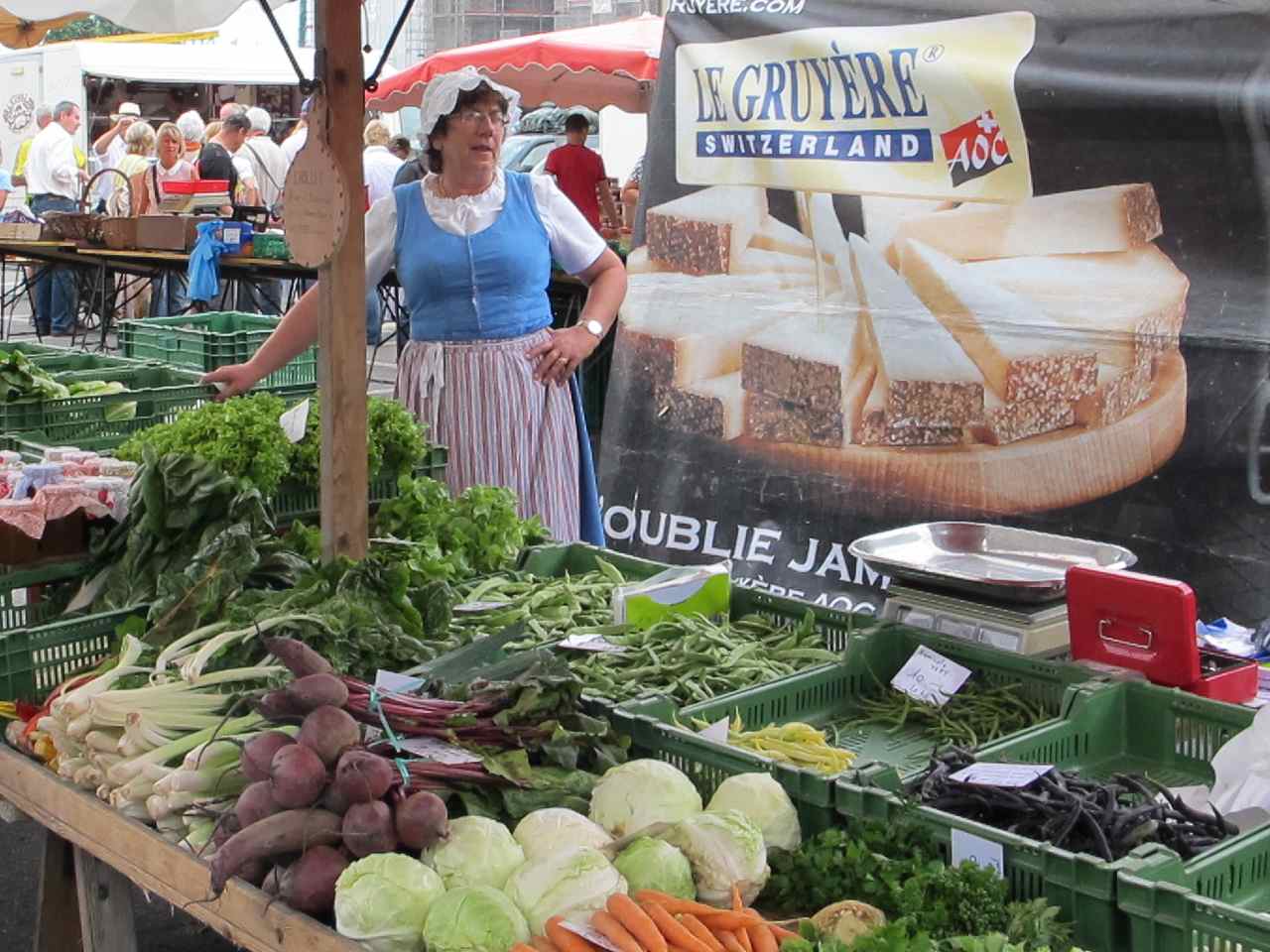
We made it to Vevey' outdoor market last Saturday, thoroughly enjoying the stalls; M & J are more independent - no stroller! no diapers! - enjoying the goods, while missing kettle korn.While we enjoyed the bottomless wine sampling! You buy a glass, then drink away.
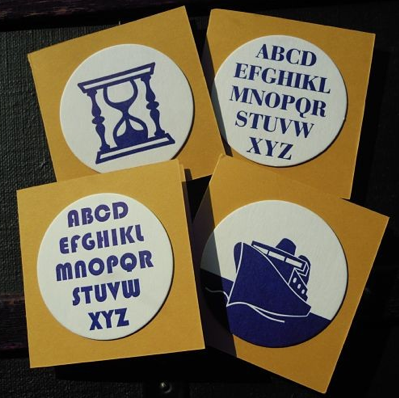
There were new vendors, such as this block print outfit doing letter prints entirely by hand! Stunning.One section had sellers decked out in folk costume
Believers were out there, too: "He is the same, yesterday, today, and forever" at the top. I admired them, as well as knowing that this form of witness was absolutely odd in Europe, even more so than in the States. But they're dedicated.

***
Picked-up our disposable grill, lakeside ritual, with Michael doing most of the grilling. Veal (wrapped in bacon), pork, North African merguez (lamb) sausages - very delicious.

Discovered Lausanne's outdoor pool and diving boards. Our thrillseeker did backflips off the 5 meter.
After church swim in the park fountain, with Michael's old school in back. Carolyn met with school officials, but need another to have M & J assessed before placement; we are hoping for the same school with same friends.

Thank you for reading this long entry!


*Confoederatio Helvetica (ancient Latin name of Switzerland), thus abbreviation CH.

Friday, August 12, 2011

Culture of Death

This may seem like an odd way to begin blogging from Switzerland, but we were introduced to this dynamic BBC program - MI5 in the States - during our last tour of duty. Refreshingly played by more classically trained actors emphasizing the physicality of acting; emotion tied to formal muscle movement, not the premise of romantic expressivity a la Hollywood (playing a taxi driver means interning at Yellow Cab, then giving voice to an authentic spirit). Not as severely overpayed as in the USA, these faces are seen in numerous shows & ads, while countering Hollywood tropes; ie morally flawed, complex heroes actually die.
Britain's answer to 24, except the European stage plays off of post-Cold War politics and hypocrisy in a single-superpower world; individual and national ambitions contradict and reinforce each other in complex ways.
Not all the actors are hunks and the more literate dialogues - spiced with Shakespeare, Milton, ancient war histories - also feature "normal" life, ie you'll find the male protagonist (Adam) folding a paper towel into a coffee filter while the average-looking intelligence queen (Ruth) attends her weekly chorale.

My personal favorite episode featured the fallen MI5 officer with paranoid delusions (below) staging a suicide, holding fellow officers captive. Memorable lines, touching upon fate:
We are what happened
to us.

and secular culture's lack of heroism:

We used to have a culture of death,
when England was Christian.

We stumbled onto Spooks years ago, finally viewing all episodes in order last year, and discovered a British expat subculture; a community dating back to the 1800s, lining the cities of Lake Geneva with tearooms, Anglican churches, bookstores, and upper-class aesthetes having mountaintop epiphanies en route to chasing sun-drenched landscapes in Italy. This fall's season 10 may mean the end of the principal, Harry!

Thursday, August 11, 2011

Ritual

The initial posting weeks ago about MI5 (btw, season 10 has begun!) and the formal nature of British acting inspired me to write about Bunraku, one of Japan's 3 classical theater forms, still active. Bunraku is puppet theater with orchestra and chanters who vocalize all roles stage right, while puppeteers manipulate the 3/4 lifesize dolls.
Striking are the high emotions these puppets create, as visceral experience links to language - script is authoritative - and text animates wooden figures. What you see is what you get, as the chanter sings all parts and visible puppet masters work the dolls; a theater parallel to interiors that make pipes and ductwork part of the design.

By contrast, Bunraku accepts & visualizes brokenness, building a transparent theatre where the parts - actor, story, prop, stage, musicians, viewer - are woven into a multifaceted, yet textual, unity.

The conventions of mainstream Hollywood film being humanistic, musical and verbal cues advance plots & characters in an unfolding, linear arc revealed, requiring passivity, distance, & fragmentation in the viewer whose main role is to identify, emote, go along.

"The function of..Western theatre of the last few centuries has been..to show what is said to be secret ("feelings,""situations,""conflicts"), while hiding the very artifice of the show (stage effects, painting, powder, light sources)...The Western spectacle is anthropomorphic...the Western actor...the voice..the look..the figure are eroticized...like so many fetishes.

Bunraku exposes the sources of theatre in their emptiness. What..replaces [theater] is the action necessary to the production of the spectacle. Work substitutes for interiority...
Emotion no longer inundates, no longer submerges, it becomes reading material."
Roland Barthes, "On Bunraku"


***

Liturgical worship operates similarly; eg All Saints follows a prayer book (essentially, an updated script based upon the Book of Common Prayer),
where the minister reads plain type, the congregation responds the bold:

The Lord is here.
His Spirit is with us.
Lift up your hearts.
We lift them to the Lord.
Let us give thanks
to the Lord our God.
It is right to give thanks and praise.

***
We break this bread
to share in the body of Christ.

Though we are many, we are one body,

because we all share in one bread.


Perhaps we are the puppets, chanters, & stage hands, bringing to life the Church Invisible, meeting Christ at the table -

"..if the Spirit of him who raised Jesus from the dead is living in you, he who raised Christ from the dead will also give life to your mortal bodies because of his Spirit who lives in you." Romans 8:11

- a Eucharistic Bunraku, if you will.

***

Western theater largely stems from the Mass, but I had to go to Japan to retrieve a premodern precedent.

***
FYI, Barthes was a pioneer semiotician & highly influential literary critic. Although there is a long history of Euro-American intellectuals, usually French, who completely misread Asia - brilliant at home, utterly stupid abroad - Barthes, was generally reliable. Japan has been an aesthetic obsession dating to the 1870s, when Monet, Van Gogh, Degas, Eisenstein, Frank L.Wright, Pound, etc interpreted Japanese culture as an artistic antidote to Western rationalism, propelling its inventive arts & design practices into global currency most recently explored by the anime and the video gaming community.

(Image, Music, Text is a classic - the chapter where he analyzes an Italian spaghetti ad, pioneer in its day.)